News

Grief, again.

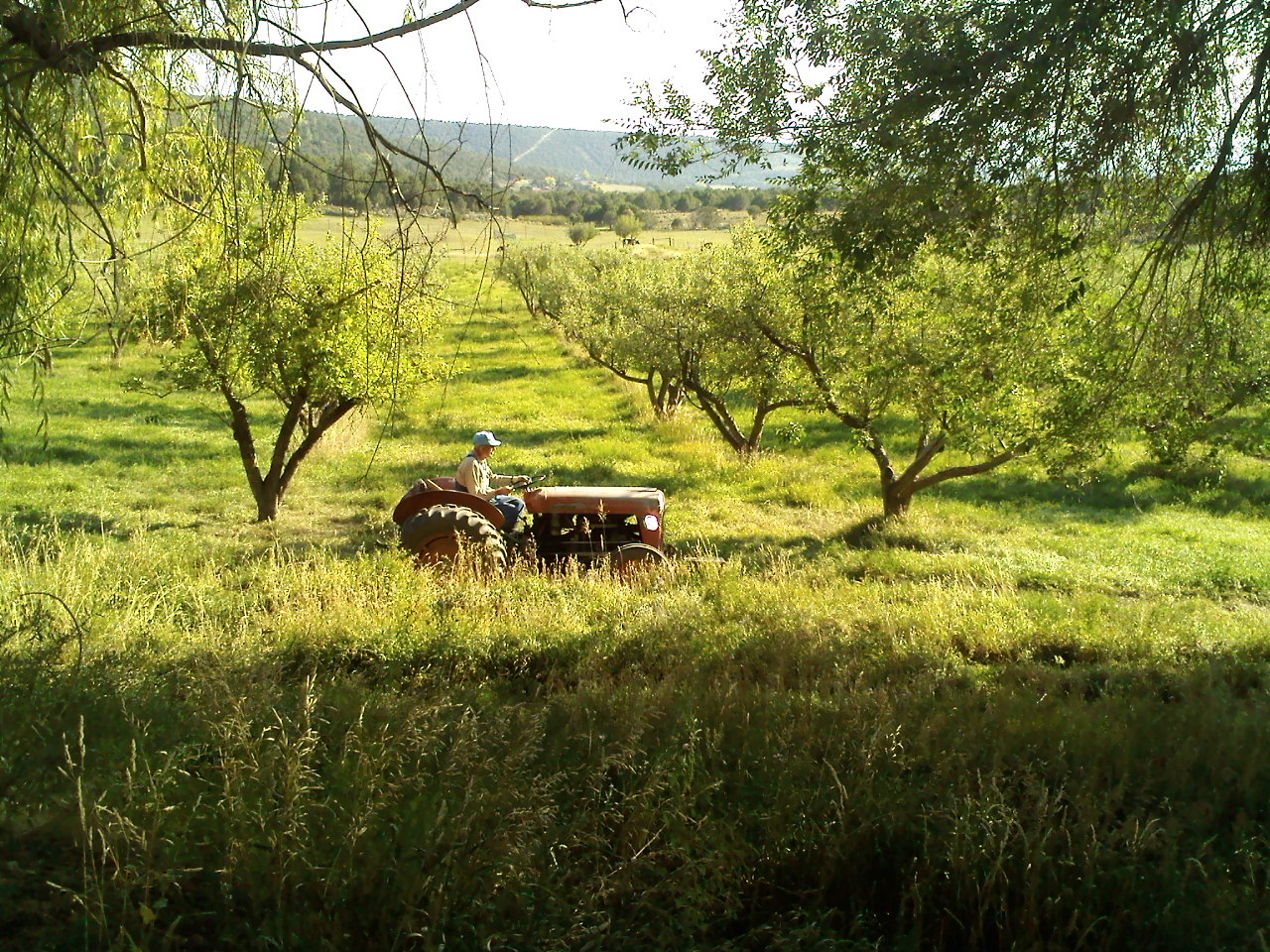
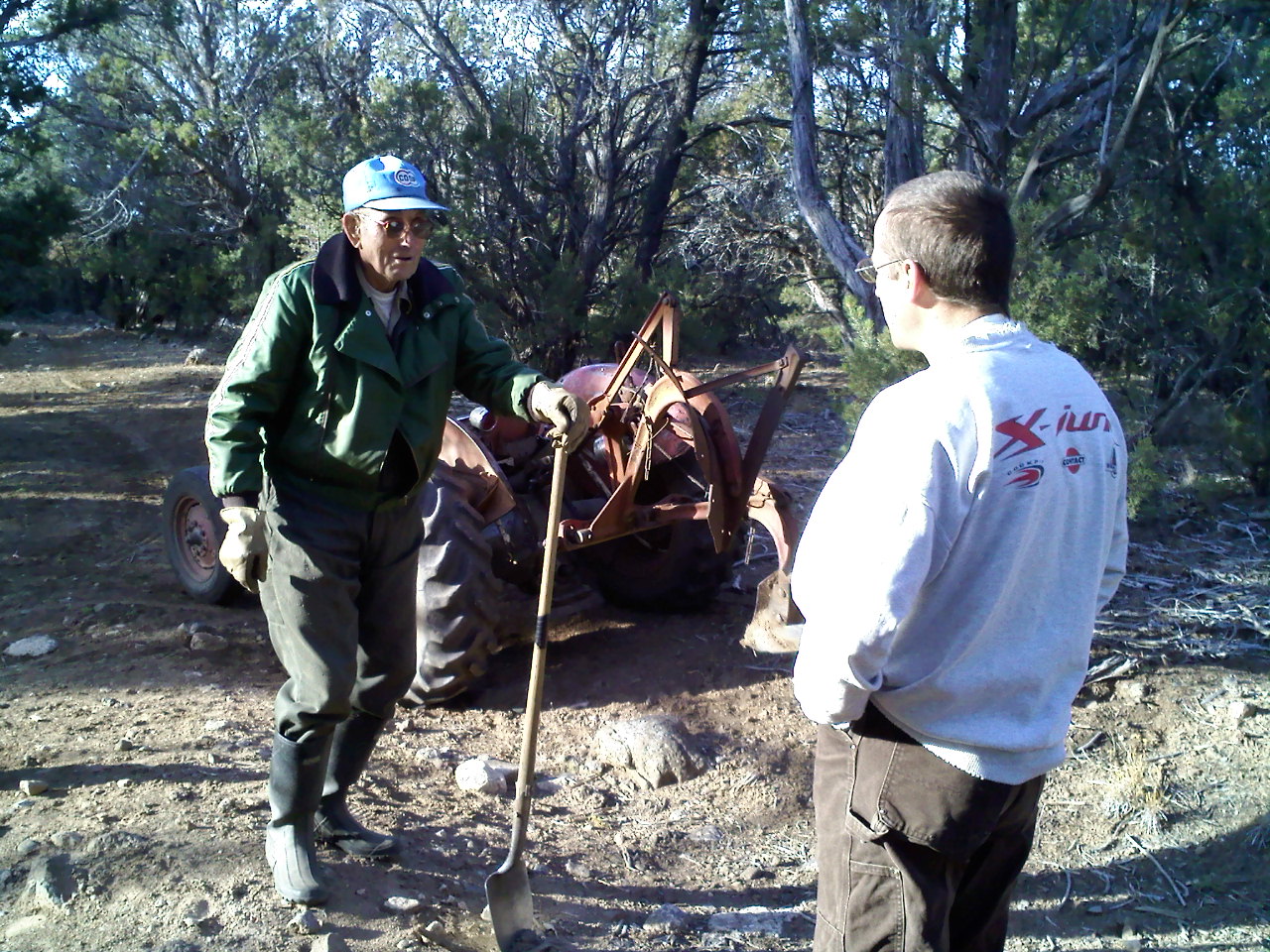
Our neighborhood lost a great man this week. Up until a few months ago, Mack Gorrod  was still rising early every morning to feed his cows. Whenever we had a big snow storm, he would drive his tractor over to plow our driveway. He insisted. He always brought a few treats for our cow dog, who greeted him with enthusiasm every time.

The first time I cried for Mack was the day last fall when they cut down his apple orchard. I knew that once his trees were gone, he would soon follow.

Since his death three days ago, I’ve tried numerous times to write about Ol’ Mack. Yet I find myself unable to articulate the depth of my sorrow. So I was interested to see Slate’s first installment of what looks to be a fascinating look at grief. It follows Meghan O’Rourke‘s outstanding series The Long Good-bye. (The basis of a book by the same title.) The series asked readers to describe their experiences with grief and offers a glimpse into one of our most personal emotions.

Mack had a stroke the same day that my 92-year-old grandma died, and when I saw the ambulance go by that morning–minutes after my mom had given me the news about grandma–I was beside myself. Losing Grandma Penner–my last remaining grandparent–was difficult enough. I couldn’t bear the thought of losing Ol’ Mack too.

We didn’t lose Mack that day; he held on for two more months. In retrospect I’m not sure that was what anyone wanted.

Some day when I gain my composure, I hope to write something more about Mack, but for now all I can say is, Mack was the bedrock of this place I call home.

Farewell Mack Gorrod. This place will not be the same without you.
Doctor, tell me a story.

I really like Kent Sepkowitz’s essay in this week’s Science Times. Sepkowitz, vice chairman of medicine at Memorial Sloan-Kettering Cancer Center, describes an interaction he had with his plumber. He tells the plumber what he thinks the problem is, and the plumber dismisses his explanation out of hand. Sepkowitz has a flash of insight,

I realized how similar these exchanges are to those I sometimes have with patients.

When we’re faced with evidence–medical, scientific, or plumbing-related–our human instinct is to create a story to explain it. Sepkowitz’s dishwasher was putting black flecks on his dishes. The human mind abhors uncertainty, so Sepkowitz invented a cause to explain the flecks. The same thing happens when a patient comes in to Sepkowitz’s office with a nonsensical explanation for a symptom.

The essay provides a vivid illustration of how stories help us process information. This line, in particular, shows why it’s so hard to replace a certain, yet wrong, story with a factual one that’s seeped in uncertainty. Sepkowitz is retelling how he’d shot down a patient’s theory of his illness.

After I finished, we stared at each other in awkward silence. I had broken his heart a little, and I too was demoralized. It is not enjoyable to trample hope.

Will Saletan on False Memories

Earlier this year, Siri Carpenter and Jeanne Erdmann started a terrific blog about science writing called The Open Notebook. The site features interviews with science writers talking about their work and revealing the “story behind the story” for well-regarded science features.

The site has featured interviews with outstanding writers, such as Roberta Kwok, Doug Fox, Hillary Rosner, David Dobbs and Robin Marantz Henig. Oh, and yours truly.

I recently had the privilege of interviewing Slate national correspondent Will Saletan for the site. We discussed his incredible eigh-part series, The Memory Doctor, on experimental psychologist Elizabeth Loftus and her work on false memories. I read the series when it came out and was really excited to see the innovative way that Saletan used the web to draw readers into the story.

In the first installment of the series, he invited readers to take part in an interactive online experiment designed to illustrate how easily memories can be manipulated. (Check it out here.) Readers were shown different images depicting recent political events and asked whether they remembered them. What readers didn’t know was that one of the photos was doctored to show an event that hadn’t happened—President Obama shaking hands with Iranian President Mahmoud Ahmadinejad, for instance.

Yet about half of the 5,000 readers who took part in Saletan’s online experiment later “remembered” the fake political stories as if they were true. They didn’t walk away with the deception though, all was revealed at the tend.

The experiment served as a powerful introduction to the concept of false memories and to Loftus, who makes a fascinating profile subject.

Read my Q&A with Saletan here.

Godspeed Grete

The sport of running has lost one of its greats. Grete Waitz died of cancer Tuesday, far too young. Along with Joan Benoit, Waitz was one of the role models I idolized as a high school cross-country runner. She was so graceful and humble, something to aspire to.

Runner’s World editor at large Amby Burfoot has a moving tribute on his blog.
http://footloose.runnersworld.com/2011/04/remembering-grete-waitz.html

Writers on the Range: For a Moment, We Could All Get Along

For a moment, we could all get along

I write about how a chance encounter with some fellow motorists showed me that political differences need not divide neighbors.

Writers on the Range, January, 2011

Slate: Is It Ethical to Prescribe Placebos?

It May Be Fake, but Trust Me—It’ll Work

Slate, March 16, 2011

When is it kosher for doctors to prescribe placebos? It’s a question I explore in this Slate piece. 


Los Angeles Times: The New Mammography Guidelines, a Year Later

The change in mammogram guidelines After a federal panel pulled back its recommendations for screenings, a debate continues to rage about the wisdom or risk of it.

The Los Angeles Times, March 7, 2011

Here, I write about the US Preventative Services Task Force breast cancer screening guidelines and explain why the Task Force recommended against routine mammography for women in their 40′s.

Los Angeles Times: Chose the Right Health Charity

How to chose a health charity.
How to vet a charity before you give.

The Los Angeles Times, December 6, 2010

Los Angeles Times: the Downside of Breast Cancer Awareness

The downside of awareness campaigns
Despite the pink ribbon push, cancer deaths have dropped only slightly. And the focus on awareness may be pushing more women into treatment unnecessarily.
The Los Angeles Times, October 4, 2010

Runner’s World: Find the Right Specialist for Your Injury

Quality Care
When you’re hurt, speed recovery by finding the best specialist for your injury.
Runner’s World, July 2010

Runner’s World: Pace Yourself

Pace Yourself
Do questions about setting (and maintaining) the right race pace constantly nag you? Relax. We’ve got the answers.
Runner’s World, April 2011

Runner’s World: 7 Most Common Running Injuries

The Big 7 Body Breakdowns
How to avoid (and recover from) the most common running injuries.
Treat and Prevent Running Injuries
Runner’s World, March 2011

Runner’s World: The Magic of Mantras

The Magic of Mantras
Think strong words. Repeat inspiring phrase. Run even better.
Runner’s World, February 2011

High Country News: Why science can’t settle endangered species disputes

Is It or Isn’t It (Just Another Mouse)?
Why science alone will not settle the West’s endangered species dilemmas
High Country News, August 7, 2006
2007 recipient of an honorable mention for print journalism from the
American Institute of Biological Sciences.

Miller-McCune: convincing the public to accept new medical evidence

Rational Arguments: Convincing the Public to Accept New Medical Guidelines
In the age of “truthiness” it’s not the evidence, but the narrative that matters most.
Miller-McCune, April 20, 2010

Reader’s Digest: Vitamin Truths and Lies

VitaminScamVitamin Truths and Lies
Why most vitamin supplements won’t make you healthier and might even hurt you.
Reader’s Digest, April 2010

Runner’s World: the Power of Pain

Christie Aschwanden’s Painful Truth at Runner’s World.
A runner finds a physical outlet for emotional suffering.
Runner’s World, December 2009

NPR: Why Cyclists Still Dope

To Dope or Not to Dope?
Will the incentives to compete clean ever exceed the payoff of taking drugs?
NPR, July 13, 2009

Los Angeles Times: Sharing Bad News Via Social Media

There are Many Ways to Share Bad News
More people are using electronic forms of communication to share medical news and updates. Web pages, e-mail, Facebook, Twitter and blogs can spread the word quickly, but critics believe such news demands a more personal approach.
Los Angeles Times, April 19, 2010

Los Angeles Times: Hospice Primer

Hospice Care Helps Patients and Loved Ones
Here’s what you need to know about this increasingly popular end-of-life care.
Los Angeles Times, January 22, 2010

Mother Jones: Thanksgiving Turkey for the Soul

Thanksgiving Turkey for the Soul
A small farmer’s first-person account of the reckoning: “I need to know my birds can resist.”
Mother Jones, Nov. 26, 2009

Los Angeles Times: Can Bikes and Cars Share the Road?

Bikes and Cars: Can We Share the Road?
With more bikes on the road, drivers are frustrated — and cyclists are at risk. Now’s the time for changes.
Los Angeles Times, November 2, 2009

Los Angeles Times: The Trouble With Mammograms

The Trouble With Mammograms
The exams lead to overdiagnosis, causing women to go through treatment for breast cancers that wouldn’t kill them.
Los Angeles Times, August 17, 2009

High Country News: From Corn to Cabernet

From Corn to Cabernet
A burgeoning wine industry takes Colorado agriculture uptown.
High Country News, August 19, 2009

Los Angeles Times: exercise genes

Blame Your DNA?
Study: Genes may detemine if you’re a fitness fanatic or a couch potato.
Los Angeles Times, September, 2009