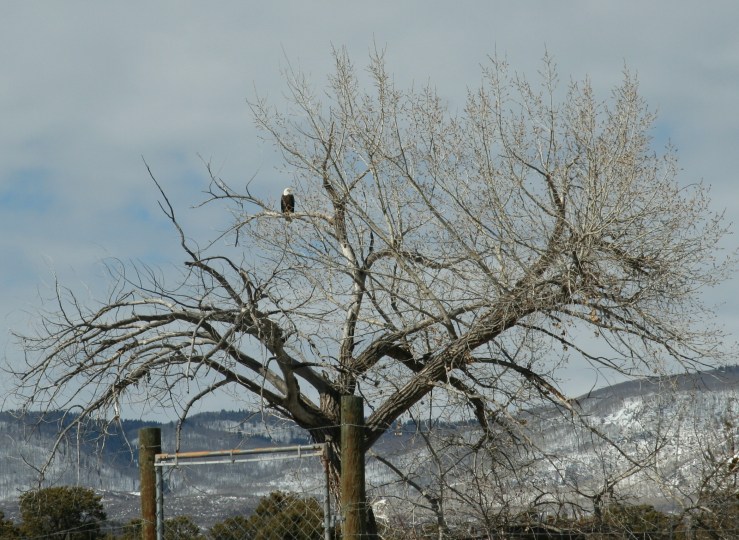
The view out my office window today. (Click to view photo.) Continue reading “Looking out my window”

Journalist, author, editor.
The view out my office window today. (Click to view photo.) Continue reading “Looking out my window”
Grief is an unbecoming emotion. It’s raw and unvarnished. It exposes truths we’d rather left unsaid. It changes relationships. The people you expect will be there aren’t, and the ones you would never have depended on are the ones who help you find a way through the darkness. Read more of my latest blog post, Death Barged In, at Last Word On Nothing.
A new Canadian study adds to the amassing research suggesting that most of what mammography has done is turn healthy people into sick, but grateful cancer survivors. It’s time to change our goals. We should be aiming to save lives, not create as many cancer patients as we possibly can.
Read more about my take on the latest mammography study at Last Word On Nothing and Slate.
Recently a reader wrote me to ask how patients can perform background checks on their doctors, to make sure that they’re in good standing. He had a reason for asking: A few years ago, he said, he’d agreed to have a spinal fusion performed by an apparently well-regarded surgeon. The operation left him worse off than when he started, and he later discovered that there were numerous malpractice lawsuits pending against the surgeon.
How do you make sure this doesn’t happen to you? My latest Washington Post column offers ways to check your MD’s background.

You know how to write and you’ve already done some freelancing, but you want to up your game — and your income. Or maybe you’re itching to quit your staff job and set off on your own to earn a living writing independently. Be your own boss. Work your own schedule. Pursue the stories you care about. If these are your passions, then Courage Camp is for you. As protagonist Owen Meaney says in the John Irving novel that bears his name, “If you’re lucky enough to find a way of life you love, you have to find the courage to live it.” Continue reading “The Courage to Live It: A Master Class on the Business of Freelancing”
A generation ago, an oncologist might have gone years without encountering a case of ductal carcinoma in situ (DCIS), a precancerous breast lesion. But widespread mammography has led to a sevenfold increase in the number of new cases of DCIS. This steep rise has some experts worried, as screening’s ability to find these precancerous lesions has outstripped knowledge about how to classify DCIS and how to treat it. At a recent state-of-the-science conference, scientists debated whether the word “carcinoma” should be removed from the name, in hopes of reducing fear and stemming a trend of overtreatment of this noninvasive pre-cancer.
Read more about DCIS and the debate about what to call it and how to treat it in my Proto Magazine feature, No Easy Answers, is published in the Winter 2014 issue of Proto Magazine.
The latest issue of Sunset Magazine arrived in my mail last week, and the cover story immediately caught my eye — “24 Best Places to Live and Work 2014.”“Looking for the perfect place to launch a career? Start a family? Just relax? We’ve found the ideal city, town, or neighborhood for you.”
For instance, if you’re “ready to put down roots,” the story’s handy flowchart offers you two choices — Issaquah, Washington (if “the burbs are calling”) or Sugar House, Salt Lake City, Utah, if they’re not.
Now Sunset is a fine magazine and they’re hardly alone in propagating these“best places” inventories.I understand the impulse to quantify a place’s attributes and size them up against other localities. But I worry that the proliferation of these lists have transformed place into a commodity rather than a commitment.
What I’ve learned from living in three countries and more than 20 locations is that there is no perfect place. Believing otherwise prevents the letting go of elsewhere necessary to create a home place where you are— a journey that takes effort and devotion.
Turning place into a consumer item diminishes its essential dimensions. As poet Gary Snyder once wrote, the demands of a life committed to a place, “Are so physically and intellectually intense, that it is a moral and spiritual choice as well.”
Communities are most alive when people are engaged and fully present — rather than merely coming home to sleep between commutes to elsewhere. Mine is the kind of place that people dream of escaping to when they’re stuck in rush hour traffic; yet too many of those who come here keep one foot planted somewhere else. Community is what happens when people have a stake in their place and an investment in its future.
Finish reading this post, 24 Reasons to Ignore Best Places Lists, at Last Word On Nothing.
Washington Post, December 13, 2013
Excerpt:
Early dementia is difficult to distinguish from mild cognitive impairment, those minor memory blips that sneak up as we age. About one in five people older than 75 have such blips, and most cases never progress to dementia or Alzheimer’s, Spence says. Some memory lapses that may seem like dementia are actually something else. In a study published last year, Danish researchers revisited the records of nearly 900 patients thought to have dementia and discovered that 41 percent of them had received faulty diagnoses.
Read the rest at The Washington Post: Why you may want to avoid a dementia test
Excerpt:
A shift in the frequency of Pap tests is only one small facet of a remarkable change taking place in the medical world. This new way of thinking contends that our medical system’s “more is better” mind-set has saddled healthy people with costly treatments that might actually hurt them, says Fiona Godlee, MD, editor-in-chief of the BMJ (formerly the British Medical Journal), a professional publication that’s leading the charge toward a risk-benefit approach to health care. As part of its Too Much Medicine campaign, the BMJ has presented a series of articles outlining how certain conditions, including osteoporosis, dementia, high cholesterol and breast cancer, are being overdiagnosed and overtreated by doctors.
Take osteoporosis. A study published in the BMJ in 2008 calculated that to prevent one woman from developing fractured vertebrae, 270 women with preosteoporosis would need to take osteoporosis drugs for three years. Two out of three of the vertebrae fractures prevented would not have caused symptoms or reduced the patient’s quality of life. So one woman would avoid a consequential fracture in her vertebrae, and the 269 other women would get no measurable benefit but would subject themselves to potential side effects such as diarrhea, an increased stroke risk, gastrointestinal troubles and a rare but very serious problem called osteonecrosis of the jaw, which causes the bone in the jaw to die.
Medical societies are another part of the “more isn’t necessarily better” movement. The ABIM Foundation created the Choosing Wisely campaign, for which 30 physician-specialty societies, such as the American Academy of Family Physicians (AAFP), each developed a list of actions doctors and patients should question. The AAFP list, for instance, includes “Don’t require a pelvic exam or other physical exam to prescribe oral contraceptive medications.” (For more examples, see “Are You Being Overtreated?”. Find each specialty’s Choosing Wisely list atchoosingwisely.org.) The lists are intended to spur conversations between doctors and patients so that together they can choose the most appropriate and necessary treatments.
I interviewed more than a dozen experts for this Consumer Reports investigation into the safety of chicken sold in grocery stores. Consumer Reports scientists tested more than 300 samples from chickens purchased in 26 states. The results showed that 97% of the breasts we tested harbored bacteria that could make you sick.
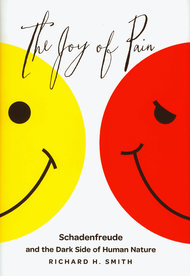 Our Pleasure in Others’ Misfortune: ‘The Joy of Pain,’ and What We Get Out of It
Review of The Joy of Pain: Schadenfreude and the Dark Side of Human Nature
By Richard H. Smith
New York Times, December 23, 2013
Excerpt:
Schadenfreude provides a glimpse into what the psychologists Roy F. Baumeister and Brad J. Bushmanhave called “the most basic conflict in the human psyche” — the friction between our selfish impulses and self-control. “We are all savages inside,” the author Cheryl Strayed wrote in her Dear Sugar column at the website The Rumpus. “We all want to be the chosen, the beloved, the esteemed.”
But life doesn’t always turn out that way, and when we encounter someone who is more chosen, beloved or esteemed than we are, our natural instinct is to tear them down to our level. If this illicit desire is fulfilled by happenstance, schadenfreude ensues. Clive James captured the feeling in a poem that takes its title from its first line: “The book of my enemy has been remaindered/ And I am pleased.”
Read the rest at the New York Times: Our Pleasure in Others’ Misfortune: ‘The Joy of Pain,’ and What We Get Out of It
Run Yourself Smarter: How exercise boosts your brain
New Scientist, November 15, 2013
pdf here: Healthy Body, Healthy Mind
The latest science on exercise and the brain suggests that exercise isn’t an enhancer of normal cognition, it’s a necessary condition. Physical activity has been show to improve brain health across every stage of life.
Washington Post, October 7, 2013
Excerpt:
What my doctor neglected to tell me is that a mammogram was, in my case, more likely to hurt than help me. Few doctors take the time to mention the risks of mammography — especially, the danger of overdiagnosis —that a mammogram might lead a patient to get needled, sliced, zapped with radiation and possibly treated with tamoxifen, a drug that increases risk of uterine cancer, for a breast lesion that wasn’t life-threatening in the first place.
Most people believe that breast cancer is inevitably a progressive disease that will kill you if you don’t remove it in time. According to this idea, which I call the relentless progression model, every big cancer is harmful, every small one is less so and every cancer is curable if only you catch it in time. It’s an appealing, intuitive idea — except that a growing body of research suggests that it’s wrong.
Read the rest at The Washington Post: I’m just saying no to mammography: Why the numbers are in my favor
The big idea behind embodied cognition is that thoughts and perceptions are not confined to the brain, but extend to the body too. As a result, our bodily states affect how we think and our perceptions are fundamentally shaped by our ability to act. The very same object can look vastly different depending on what you intend to do and your ability to perform that intended action. Studies suggest that simply holding a gun changes the way you perceive the world around you.
Read more about embodied cognition in my Discover magazine story, Where Do Thoughts Occur?
More about embodied cognition and guns in my blog post, Guns on the Brain.
The Molester and Me
My high school coach was like a dad to me, until he abused my teammate and violated us all.
Slate, June 7, 2013
Excerpt:
For a moment, I felt paralyzed. This can’t be true, my body said, even as my mind could not deny that it was. My initial grief gave way to rage. I’d trusted Coach, and he’d betrayed me, betrayed all of us. He didn’t care about me at all.
Read the rest at Slate: The Molester and Me
Do bike helmet laws really save people?
Washington Post, June 3, 2013
Excerpt:
Mandatory helmet laws, like one brought up in the Maryland legislature this winter, might seem like a no-brainer. Yet when the medical journal BMJ polled its readers in 2011, 68 percent of the respondents opposed mandatory helmet laws. The Washington Area Bicyclist Association (WABA) also opposes mandatory helmet laws, and its members testified againstMaryland House Bill 339, which never made it out of committee before the legislative session ended in April.
Proponents of helmet laws say that they reduce injuries. But evidence for this claim remains mixed.
Read the rest at the Washington Post: Do bike helmet laws really save people?
Flight of the Bumble Bee
Why would anyone run all night through some of the West’s most rugged mountains just to help some other guy finish a completely ridiculous race? Christie Aschwanden went to the Wasatch Front 100-mile ultramarathon to find out.
Runner’s World, May 2009
Athletes, Stop Taking Supplements
They’re expensive, they don’t improve performance, and they might make you test positive for dope.
Slate, July 26, 2012
Excerpt:
Hardy is among a growing number of athletes who have traced a positive doping test back to a tainted supplement. Swimmer Kicker Vencill and cyclists Flavia Oliveira andScott Moninger (an acquaintance of mine), also tested positive after taking supplements, and 400-meter gold medalist LaShawn Merritt linked his positive dope test to a product called Extenz that he picked up at 7-Eleven. The problem is so prevalent that the U.S. Anti-Doping Agency (USADA) has developed an educational campaign for athletes, called Supplements 411.
Supplements are risky thanks in part to a piece of legislation passed in 1994 called the Dietary Supplements and Health Education Act. The DSHEA essentially deregulated dietary supplements, including vitamins, herbs, protein shake mixes, nutritional supplements, and other powders and pills that millions of people of all levels of athletic ability might take to improve their health. Most people assume that if a product is available on store shelves, it must be OK. But supplements are not required to be evaluated or proven safe or effective before they’re sold. New rules finalized in 2007 gave the FDA power to regulate the manufacturing and packaging of supplements, but the agency’s ability to police supplement companies remains limited by DSHEA. Its chief author and most powerful advocate is Sen. Orrin Hatch, whose home state of Utah is home to much of the U.S. supplement industry. Hatch, who attributes his good health to the supplements he takes each day, fought a recent amendment to increase the FDA’s ability to regulate the industry.
Read the rest at Slate: Athletes, Stop Taking Supplements
 Could You Find Contentment in Your Own Backyard?
Christie Aschwanden spent her youth traipsing around the globe—until she discovered what it meant to find contentment in her own home.
O, the Oprah Magazine; May, 2012
Excerpt:
The walk is not negotiable. No matter how full the day’s agenda, we go—my husband, my cow dog, and I, down our rural western Colorado road, past the neighbor’s property to the dead end, up the old dirt track grown over with sagebrush and piñon saplings, to the top of the hill where the path ends under a red sandstone cliff. I’ve watched sunset after sunset from this private perch, and each is the most beautiful I’ve ever seen.
I have never wanted for spectacular sunsets. As an air force brat, a competitive ski racer, and then a journalist, I’ve watched the sun go down on five continents. I’ve lived in three countries and more than a dozen cities; trekked up and down the Alps, through Central American rainforests, and along Mediterranean coasts, seeking novelty and adventure. But a kind of loneliness lurked in my perpetual motion. I could fit in anywhere, yet I belonged nowhere.
Read the rest here: Could You Find Contentment in Your Own Backyard?
Brian Vastag is a science reporter at The Washington Post, where he covers general science, the environment, climate change, and space. Vastag covered the Fukushima nuclear plant meltdown for the Post, penning six front-page stories during the height of the crisis and more than a dozen stories overall on the disaster and its political fallout.
Before landing at the Post in January 2011, Vastag spent nearly six years freelancing for some 40 publications, including U.S. News & World Report, New Scientist, Health, Nature, Science, Scientific American, Science News and National Geographic News. From 2000 to 2004, Vastag served as Washington news editor for the Journal of the American Medical Association, operating as a one-man bureau while covering biomedical research and policy from Capitol Hill to the National Institutes of Health and the Food and Drug Administration. Vastag has made live radio appearances on BBC World Service, WNYC, and Public Radio International’s The World, with television appearances on MSNBC and CNN.
Vastag is a member of the panel, Covering Scientific Controversies, that will take place Saturday, October 15th, from 1:30 pm – 3:00 pm at the Wettaw Auditorium at the University of Northern Arizona. The panel is part of the annual National Association of Science Writers meeting.
I interviewed Vastag prior to the NASW panel. In our interview, we discussed his Fukushima reporting as well as an investigative piece about offshore stem cell treatments that he wrote for the Post in 2008, Injections of Hope: Doctors promote offshore stem cell treatments, but some patients cry foul.
Click the following link to listen to the interview. (Or right click the link to download the .mp3 so you can listen on your audio device.)
Gary Taubes is the author of Nobel Dreams (1987), Bad Science: The Short Life and Weird Times of Cold Fusion (1993), Good Calories, Bad Calories (2007), and Why We Get Fat and What to Do About It (2010). He studied applied physics at Harvard and aerospace engineering at Stanford (MS, 1978). After receiving a master’s degree in journalism at Columbia University in 1981, Taubes joined Discover magazine as a staff reporter in 1982. Since then he has written numerous articles for Discover, Science and other magazines. Originally focusing on physics issues, his interests have more recently turned to medicine and nutrition.
Taubes’ books have all dealt with scientific controversies. Nobel Dreams takes a critical look at the politics and experimental techniques behind the Nobel Prize-winning work of physicist Carlo Rubbia. Bad Science is a chronicle of the short-lived media frenzy surrounding the Pons-Fleischmann cold fusion experiments of 1989.
Taubes is a member of the panel, Covering Scientific Controversies, that will take place Saturday, October 15th, from 1:30 pm – 3:00 pm at the Wettaw Auditorium at the University of Northern Arizona. The panel is part of the annual National Association of Science Writers meeting.
I spoke with Taubes about his controversial New York Times Magazine story, Is Sugar Toxic?
Click the following link to listen to the interview. (Or right click the link to download the .mp3 so you can listen on your audio device.)
Jennifer Kahn has been a contributing editor at Wired magazine since 2003, and a feature writer for The New Yorker, National Geographic, Outside, Mother Jones, and the New York Times, among others. Her work has been selected for the Best American Science Writing series four times in the past seven years. A graduate of Princeton University and UC Berkeley, she has degrees in astrophysics and journalism. Since 2008, she has taught in the Magazine Program at the UC Berkeley Graduate School of Journalism.
Kahn is a member of my NASW panel, Covering Scientific Controversies, that will take place Saturday, October 15th, from 1:30 pm – 3:00 pm at the Wettaw Auditorium at the University of Northern Arizona. The panel is part of the annual National Association of Science Writers meeting.
I spoke with Kahn about her New Yorker piece, “A Cloud of Smoke,” about a policeman whose death four years after 9/11 was not what it seemed.
Click the following link to listen to the interview. (Or right click the link to download the .mp3 so you can listen on your audio device.)

A lot of people have been asking me what I think about Tyler Hamilton’s confession. In 2007, I wrote a Bicycling magazine feature about Tyler, his supporters and why I don’t believe. (You can read the story here.)
Some friends over at the Last Word on Nothing blog invited me to write about Tyler’s confession. Here’s what I wrote: Lies and the Lying Bicyclist Who Tells Them.
I believe in forgiveness, but it takes more than the wave of a hand. I hope that Tyler finds a way to atone for his betrayals and revive the person that he once was. He has a long road ahead.
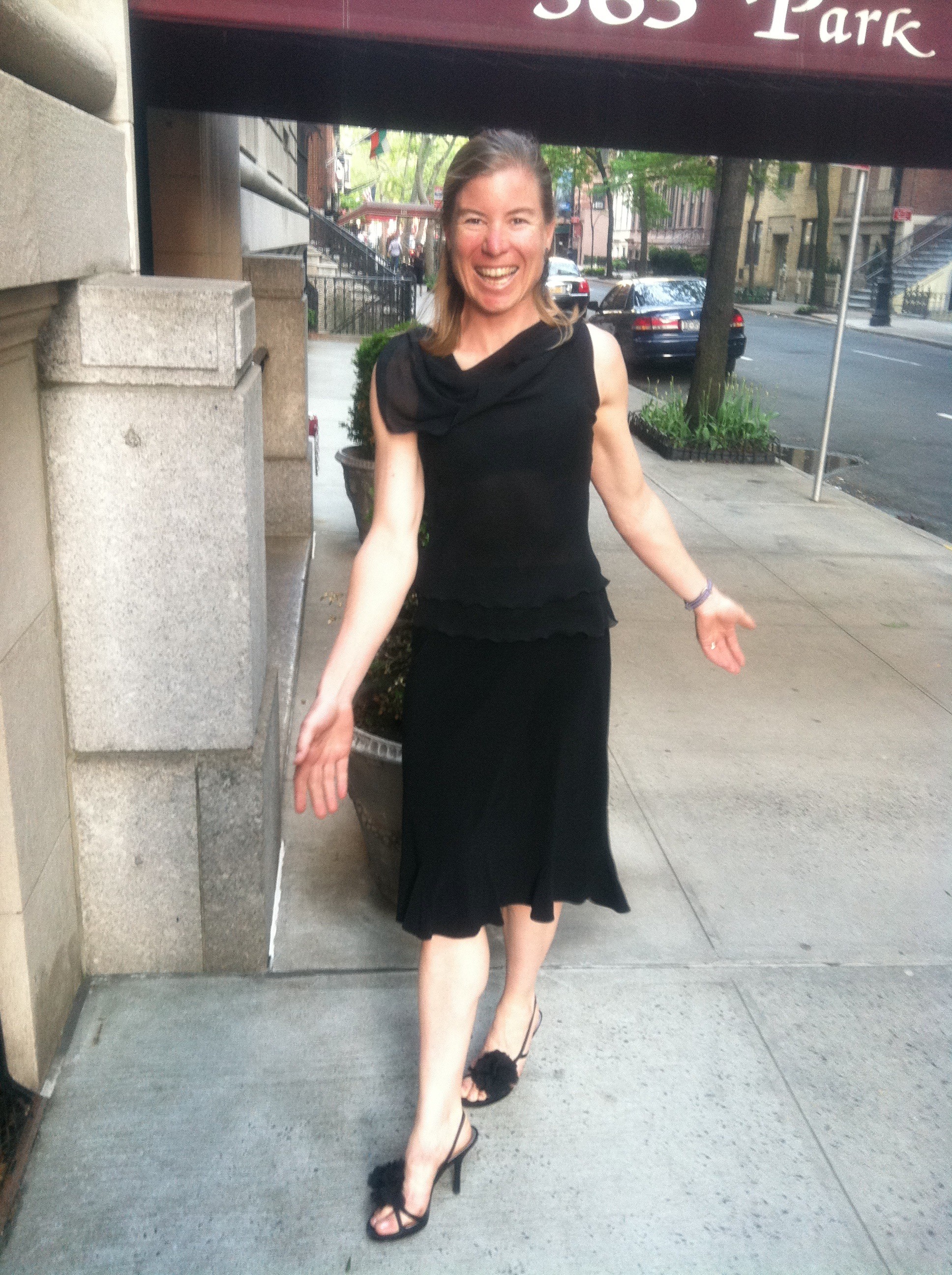 It was a tremendous honor to be selected as a finalist for the National Magazine Award this year. The nomination was for a Runner’s World feature package, Pet Project.
Last week, I attended the awards ceremony in New York City with my assigning editor, the talented Peter Flax (now editor in chief for Bicycling magazine), Runner’s World’s editor in chief David Willey, fellow writer Marc Parent and a whole table full of other wonderful Runner’s World staffers.
We didn’t win the award, but I had a great time anyway. As a freelancer, I rarely get a chance to see so many of my colleagues in one room. One of the highlights of the evening was meeting up with some of my former editors from the old Health magazine in San Francisco. Barbara Paulsen and Bruce Kelley gave me my start and I’m still grateful.
I figured I should share a few photos, since it’s not often that I trade running shoes for heels.

 Christie Aschwanden